LitBuy Spreadsheet categories, sorted by the photo that settles a claim
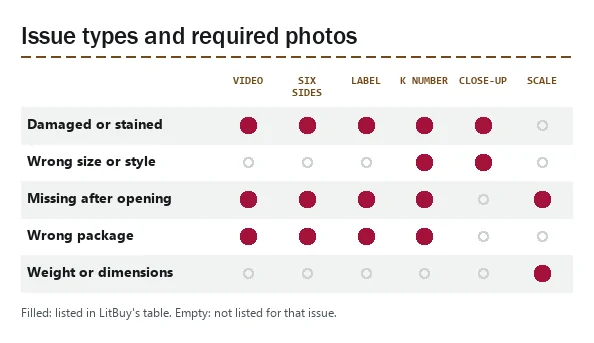
Browse sixteen kinds of finds. Under each name is the evidence LitBuy's own table asks for when that kind of item turns up damaged, short or in the wrong size.
All sixteen categories, grouped by the deciding photo
The order is deliberate. The first seven are clothing, where a size claim fails without a readable label; then shoes and accessories, where a close-up of the fault carries the case; then small, sealed or powered goods, where the scale photo and the six sides of the box come first.
 OuterwearSize tag photo, then the whole coat laid flatCategory
 HoodiesHang tag close-up and a flat layCategory
 T-shirtsNeck label in focus, shirt laid flatCategory
 JeansWaist label close-up plus a flat layCategory
 SweatpantsSize label photo and a full flat shotCategory
 WomenswearLabel close-up and flat lay for any fit claimSearch results
 Sports jerseysNeck tag and the shirt laid out wholeCategory
 SneakersClose-up of any mark, plus the size labelCategory
 BagsScuff close-ups next to the K-number bag labelCategory
 HatsClose-up of the fault and the order labelCategory
 BeltsBuckle and edge close-ups in daylightCategory
 JewelleryEvery piece on the scale with the opened boxCategory
 WatchesScale photo with all items, then the K labelCategory
 EyewearSix sides of the box before any crack close-upCategory
 PerfumeConfirm liquid acceptance before paying.Category
 ElectronicsFilm every accessory: the warehouse does not power these onCategory
What a LitBuy Spreadsheet catalogue gives you
A finds catalogue saves you the first hour of shopping. Instead of searching a Chinese marketplace in a language you may not read, you browse by category through products that other shoppers have already found, open the one you like and buy it through LitBuy. What it cannot do is tell you how that item will behave in a box for two weeks.
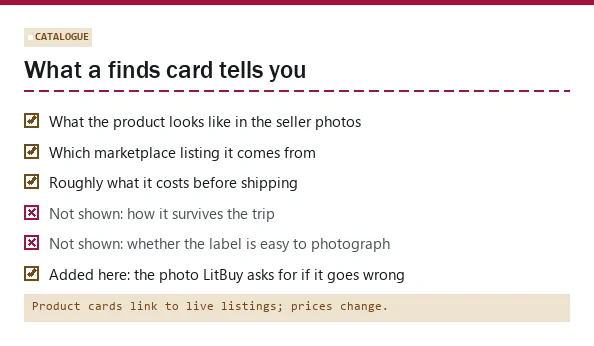
That is why each card on this page carries a second line. It names the photo you would need if the item arrived wrong, taken from LitBuy's own required-documents table. Reading it before you buy changes small habits: you keep the hang tag on until the fit is checked, you photograph the scale before you open a box of rings, and you film the accessories of a gadget one by one.
Keep a purchase record before you need a claim record
Open the source listing, select the variant and save the details that determine what you expect to receive. For a shirt that means the chosen size, its measurement chart and material; for a bundle it includes the number of pieces. A thumbnail or a first displayed price may not describe the selected option. Preserve the seller URL alongside the eventual agent item reference.
This Spreadsheet is a directory, not a seller or a payment account. LitBuy handles the purchase and warehouse stage, while the shop supplies the item. A later delivery problem is easier to explain when you can connect those records to the parcel. Saving evidence helps identify a difference; it does not turn every difference into an automatically payable claim.
Clothing: the size label decides
Six of LitBuy's eleven example photos are about the parcel, and the clothing ones are about labels. For an incorrect size or style, the required-documents table asks for three things: the order number starting with K, a full photo of the item laid flat, and close-ups of the size label or hang tag.
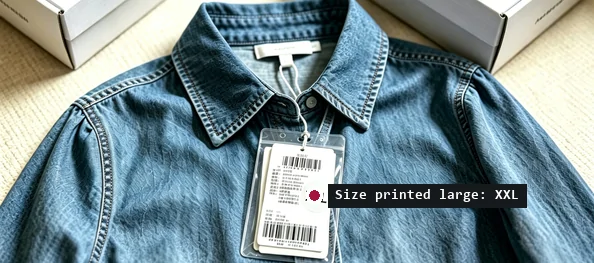
Its note column is blunt: LitBuy says it cannot verify size-related issues for items without a size label or tag. So if you cut labels off on arrival, you lose the claim. Check the fit first. Then lay the item flat on a plain floor, in daylight, with nothing folded under it, the way LitBuy's own denim shirt example is shot.
Shoes, bags, caps and belts: the close-up decides
For a damaged or stained item, the table asks for the unboxing video, photos of all six sides of the outer box with its tape, the international label, and the order number with close-ups that show the damage. Its note: the damage or stains must be clearly visible.
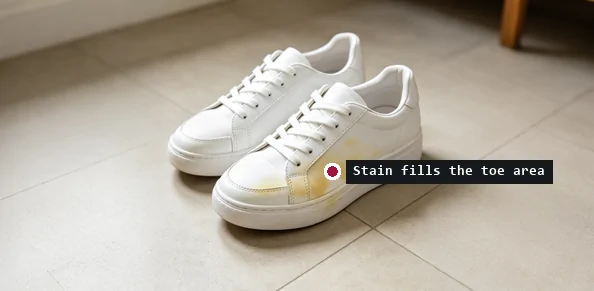
That sounds obvious until you try to photograph a scuff on black leather under a ceiling light. Use daylight from the side, fill the frame with the fault, then take one wider shot so the reader can tell which shoe, which strap, which side. LitBuy's trainer example does exactly this: a pair on a tiled floor, with the stain across the toe of one shoe.
Jewellery, watches and gadgets: the scale photo decides
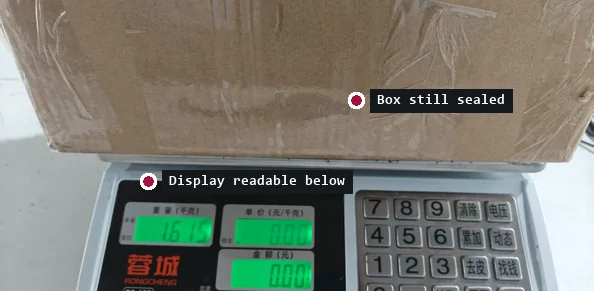
Small items are the ones that go missing. For missing items after opening, LitBuy's table asks for a photo showing all received items together with the original package placed on a scale, and it notes that the scale reading must be clearly visible so the parcel weight can be checked. That reading is compared with the weight recorded when the parcel left the warehouse.
Electronics add a second issue. The warehouse looks at the appearance and the accessories and does not switch the device on, so a fault that only shows when powered is something you discover first. Film the accessories one by one as they come out, then test the device on camera if you can.
Glasses, fragrance and anything fragile
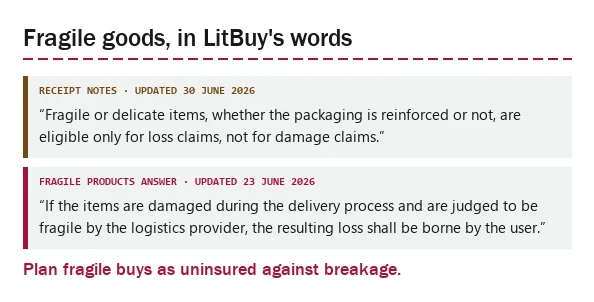
LitBuy's receipt notes say that fragile or delicate items, whether the packaging was reinforced or not, are eligible only for loss claims and not for damage claims. Another help page adds that if the logistics provider judges an item fragile, a breakage in transit is borne by the user.
We do not soften that. If you buy a glass bottle or a pair of sunglasses, assume a crack in transit is your loss. Evidence still matters for the other two cases that remain open: a parcel that never arrives, and an item that is missing or wrong when the box is opened. Six sides of the box before opening, then the scale photo, then the contents.
How we matched categories to LitBuy rules
LitBuy's tables name issues (damaged or stained, incorrect size or style, missing items, wrong package, weight or dimensions), not product categories. Matching a category to the photo that usually decides its claims is our own editorial reading. Where an item could fall into two groups, a jacket with a broken zip for example, follow the issue, not the category: a broken zip is damage, so the close-up rule applies.
If LitBuy changes its table, this page changes with it. The version we used is the one in the help article updated on 7 July 2026 and read on 16 October 2026.